AI Copilots Are Old News: What Actually Makes Something 'Agentic' in 2026
· 13 min read
If a product calls itself "agentic," the fastest way to know whether that's true is to ask one question: can it fail a step, notice, and change its own plan without you clicking anything? If the answer is no, you're looking at a copilot with a new label. That's the entire distinction, and most of the "10 AI trends for 2026" posts you've read this year give it one paragraph before moving on to the next bullet. I've spent the last few months building both kinds of systems — a copilot-style automation layer for a government-funded rural development programme, and an early agentic workflow inside CreatorBit — and the gap between them is bigger and more expensive than the marketing suggests.
This post is that one paragraph, expanded into what it should have been.
The actual definition, not the marketing one
A copilot assists. You ask, it drafts, you decide, you click send. Every single time. It has no memory of the outcome of its last suggestion, no ability to choose a different path when the first one doesn't work, and no permission to act without you in the loop for each step. GitHub Copilot suggesting a function, an email tool drafting a reply for you to approve, a dashboard tool summarizing your data on request — these are copilots even when the underlying model is extremely capable. Capability isn't the differentiator. Autonomy is.
Agentic AI is given a goal, not a prompt. It plans a sequence of steps to reach that goal, executes them using tools and APIs, checks whether each step actually worked, and re-plans when one doesn't — all without a human approving each individual action. The oversight moves from "approve every step" to "review the outcome, or get pulled in only when something crosses a defined threshold." That's the whole shift. Everything else — the fancier chat UI, the "AI teammate" branding, the org chart diagrams with little robot avatars — is decoration on top of that one mechanical difference.
A concrete before/after (not a CRM example)
Most of these comparisons default to CRM because it's the easiest to visualize. Here's one from a different corner of SaaS: subscription billing recovery, which is a real problem for anyone running recurring revenue, including me with CreatorBit.
Before — copilot-assisted dunning:
A payment fails. Someone on the team gets a Slack alert. They open the billing dashboard, pull up the customer's history, and ask the AI copilot to draft a recovery email. The copilot writes a solid, personalized draft based on the customer's plan and tenure. A human reads it, tweaks a line, sends it. If the customer doesn't respond in three days, the same human has to remember to check back, ask the copilot for a follow-up draft, and repeat the cycle. Every single action — reading the failure, drafting the message, deciding when to escalate, updating the subscription record — still runs through a person. The copilot made each individual step faster. It didn't remove any of the steps.
After — actually agentic dunning:
The system is given the goal directly: recover failed payments while protecting customer relationships and staying inside a defined discount ceiling. It detects the failure itself, checks the card decline reason code, and decides the retry strategy based on that reason — a soft decline gets an automatic retry in 24 hours with no customer contact at all, a hard decline triggers a personalized email immediately. It sends the message, monitors whether the invoice gets paid, and if it doesn't, escalates to SMS on day three and adjusts the tone based on the customer's plan tier. If the customer replies asking for a discount, the agent can approve up to a pre-authorized ceiling on its own and only kicks the case to a human if the ask exceeds that ceiling or the customer threatens to churn. Every decision it makes — which channel, which tone, which discount, when to escalate to a person — gets logged with the reasoning attached, so a human can audit the whole sequence after the fact instead of approving it beforehand.
Same underlying problem, same AI model quality even. The difference is entirely about who's making the moment-to-moment decisions and where the human's attention actually gets spent — on outcomes and edge cases, not on approving every step.
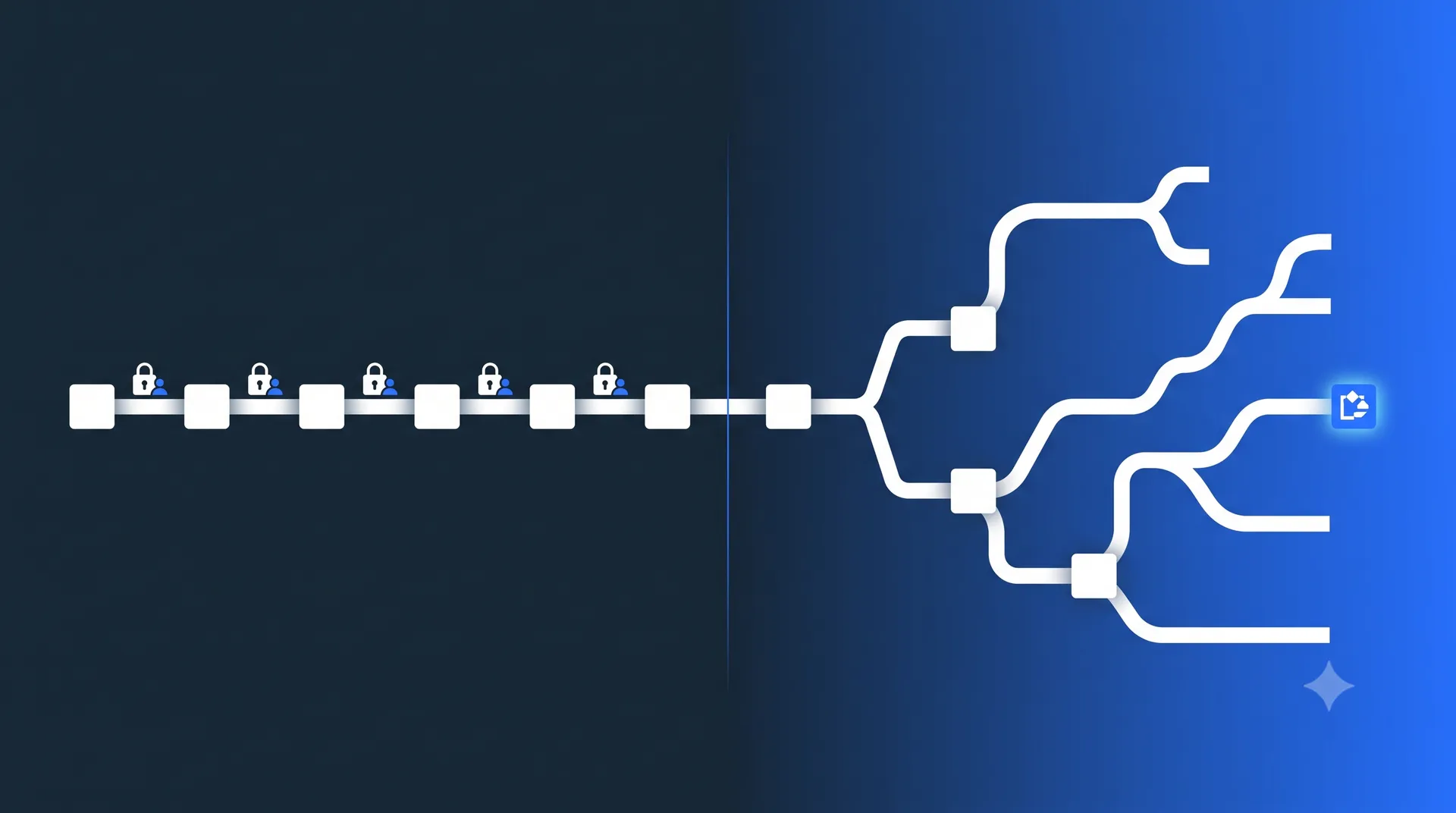
Why so much "agentic AI" in SaaS right now is a copilot wearing a name tag
This is the part that actually matters for anyone evaluating tools, and it's the part the roundup articles rush past. Over the last year, "agentic" became the label vendors reach for whenever they want a premium price tier, regardless of whether the product re-plans anything on its own. Industry analysts have started calling this agent-washing — rebranding a chatbot, an RPA script, or a chained set of prompts as an autonomous agent because the term sells better than "automation." Gartner has flagged it explicitly as a growing pattern to watch for, and multiple 2026 vendor comparisons I've read while researching this piece point to the same red flag: a system that can't autonomously recover from a failed step isn't agentic, no matter how many tools it's wired into.
The tell is almost always the same. Ask the vendor what happens when step three of a five-step process fails in a way the system hasn't seen before. If the honest answer is "it stops and alerts someone," you're looking at automation with a chat interface. If the answer is "it tries an alternate path, or gathers more context and adjusts," you're looking at something closer to actually agentic.
The practical checklist: seven questions before you believe the pitch
I use this list now whenever I'm evaluating a tool for CreatorBit or recommending one to a Ganlary Labs client. None of these require a technical background to ask.
- Does it re-plan, or does it just retry? A retry repeats the same failed action. Re-planning means it tries a genuinely different approach when the first one doesn't work.
- Can it choose between tools based on context, or is the tool sequence fixed? If the workflow is the same five API calls in the same order every single time, that's a script, not a decision-maker.
- Does it carry memory across the task, not just within one prompt? Real agentic systems track what they've already tried and why, so they don't repeat a failed action three times in a row.
- Can it act without a human approving each individual step? This is the single biggest tell. If a person has to click "approve" before every action, autonomy hasn't actually moved anywhere.
- Is there an audit log of every autonomous decision, with the reasoning attached? If the vendor can't show you a record of what the system decided and why, you have no way to catch it when it's wrong — which brings us to the next section.
- What's the defined escalation threshold, and can you actually change it? Real agentic products let you set the boundary — dollar amount, risk level, customer tier — where the system has to stop and ask a human. If there's no configurable threshold, there's no real governance layer.
- Is pricing tied to seats, or to outcomes? This one is a surprisingly reliable signal, and it's the search term a lot of buyers are typing into Google right now without finding a straight answer — more on that below.
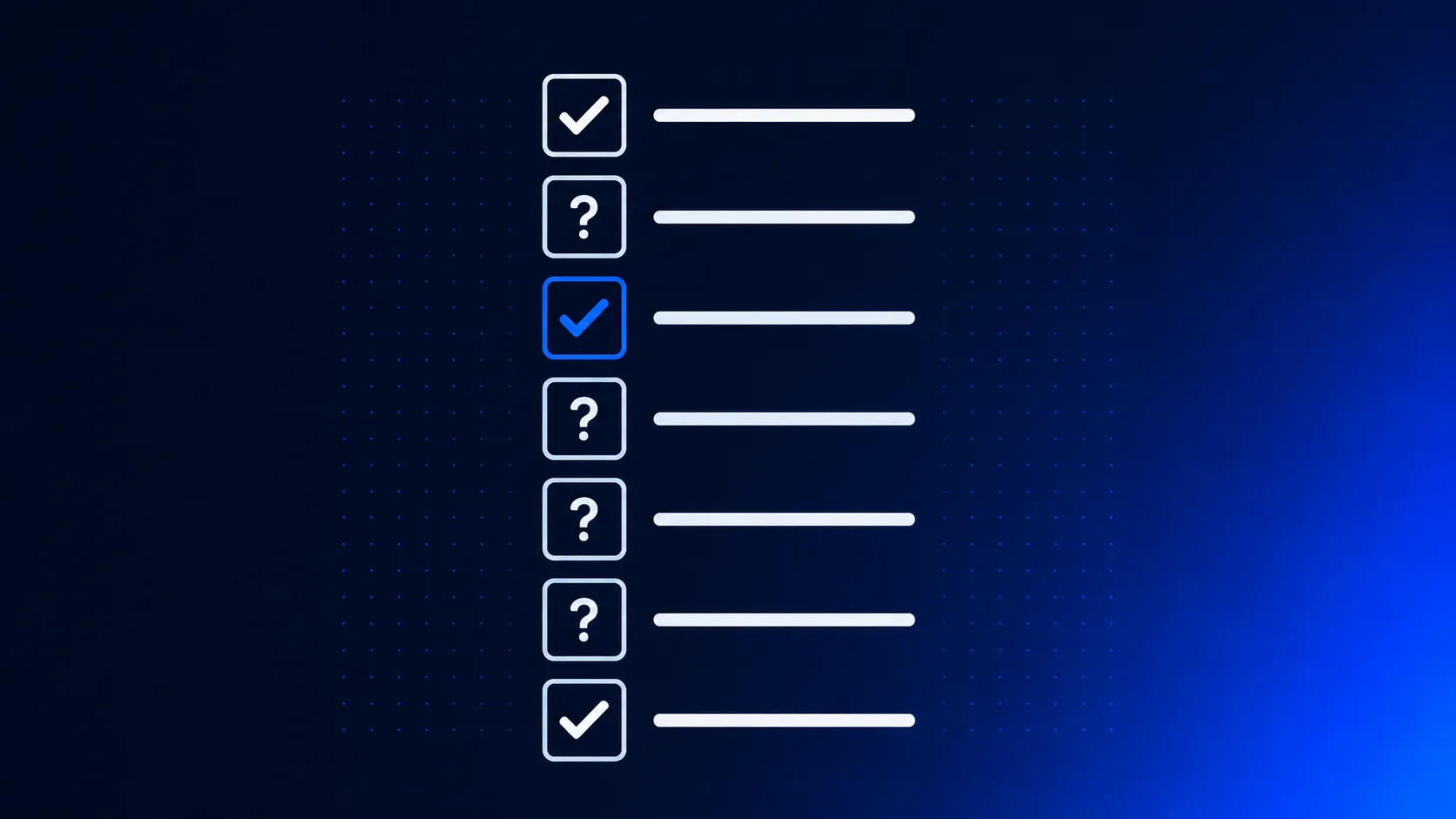
The trust and oversight gap nobody wants to write a full section about
Here's the part that gets a single throwaway sentence in most 2026 AI trend pieces, even though it's the part that actually determines whether a business should adopt agentic tools at all: autonomy and accountability move in opposite directions unless you deliberately design against it.
When a copilot drafts something wrong, a human catches it before it goes out, because a human was always in the loop. When an agentic system acts wrong — sends the wrong discount, escalates a customer it shouldn't have, misreads a decline code and cancels a subscription that should have been retried — nobody catches it until after the fact, because catching it after the fact is the entire design premise. That's not a hypothetical risk, it's the trade you're explicitly making in exchange for the system doing work without you.
This is where the compliance question stops being abstract, especially if you're in a regulated industry or, like the programme I work on, operating under grant compliance requirements where every disbursement and report has to be traceable back to a decision someone can defend. The questions worth asking before you deploy anything agentic:
- Who is accountable when the agent makes a bad call? Not legally in the abstract — specifically, inside your org, whose name is on the decision log?
- Can you fully reconstruct what the agent did and why, after the fact? If the answer requires digging through raw model logs nobody can actually read, that's not a real audit trail.
- Is there a hard boundary the agent cannot cross regardless of what it decides — a spend cap, a data-access limit, a category of action it's simply not permitted to take? Soft guidance ("try to stay under X") is not the same as a hard constraint the system architecturally cannot exceed.
- Can you pause or roll back an in-progress agentic sequence, or does it run to completion once triggered? A lot of early agentic products don't have a real kill switch, and that's the kind of gap you only discover during an incident.
None of this means agentic AI is unsafe. It means the safety has to be designed in on purpose — permission scoping, spend ceilings, human-in-the-loop checkpoints at the decisions that actually matter — rather than assumed because the marketing page uses the word "autonomous" a lot. The vendors doing this well talk about it specifically. The ones agent-washing tend to change the subject.
What this means for pricing
Seat-based pricing made sense for copilots because the unit of value was "a person got faster." It stops making sense for agentic tools because the unit of value shifts to "a task got completed without a person." That's why you're increasingly seeing agentic products priced per resolved case, per completed workflow, or as a percentage of recovered revenue instead of a flat monthly seat fee — and it's also why comparing an agentic tool's price against a copilot's price-per-seat is comparing two different things entirely. If a vendor is charging you seat-based pricing for something they're calling agentic, ask why — either the product isn't actually operating autonomously enough to justify outcome-based pricing, or they haven't updated their pricing model to match what the product does, both of which are worth knowing before you sign.
What I'm actually doing about this, honestly
I'll be straight about where I am on this myself, because pretending otherwise would undercut the whole point of this post. What I've built for the HRDP reporting automation at Citizens Foundation is a copilot, not an agent, by the definition above — it drafts and structures reports, flags inconsistencies in the field data, and cuts the manual assembly time down significantly, but a programme officer still reviews and approves every report before it goes out, because that's exactly the level of oversight a grant-funded rural development programme should have. I'm not trying to make that one agentic; the compliance requirements are the point, not an obstacle.
CreatorBit is where I'm actually experimenting with a narrow agentic workflow — automated payout retry logic, scoped tightly, with a hard dollar ceiling and full logging, closer to the dunning example above than to anything with broad autonomy. It's early, it's deliberately narrow, and I'd rather ship a small agentic feature that's genuinely trustworthy than a broad one I can't fully explain when something goes wrong.
Where this actually matters for small teams, not just enterprises
Most of what's written about this shift assumes you're an enterprise buyer with a governance committee. Most of the people actually reading this are solo builders, small SaaS teams, or freelancers deciding whether to pay for the "agentic" tier of a tool they already use. The calculus is different at that scale, and it's worth saying plainly.
If you're a team of one to five people, the appeal of agentic tools isn't abstract efficiency — it's that you don't have anyone to hand the "approve every step" job to in the first place. That's exactly why agentic tools are tempting at small scale and exactly why the oversight questions matter more, not less. A large company that gets a dunning sequence wrong eats the customer complaint and moves on. A solo founder who lets an unscoped agent handle billing recovery and gets it wrong might lose a customer relationship they can't afford to lose, or worse, discover a spend ceiling didn't actually hold and a refund got auto-approved past what they meant to authorize. Small teams have less slack to absorb an autonomous mistake, which is exactly the group that most needs to actually read the audit log and escalation-threshold settings instead of trusting the default configuration.
The flip side is that small teams also get the clearest win from doing this right. A two-person team that scopes one narrow, well-audited agentic workflow — payment recovery, support ticket triage below a certain complexity, content repurposing across formats — gets back hours a week that used to go into repetitive step-by-step supervision. That's a real, compounding advantage, and it's the actual reason to care about this shift instead of a reason to be scared of it. The mistake is adopting broad, unscoped autonomy because the marketing made it sound inevitable, rather than picking one workflow, setting a hard boundary, and watching the audit trail for a few weeks before trusting it with anything bigger.
A note on multi-agent systems, briefly
You'll increasingly see "multi-agent" alongside "agentic" in vendor pitches this year — the idea of several specialized agents coordinating on a single goal instead of one agent doing everything. It's a real and fast-growing area, and analysts have pointed to it as the next layer of the shift beyond single-agent tools. For most small SaaS teams and solo builders, though, it's worth treating as a later-stage concern, not a starting point. The checklist above still applies to each individual agent in a multi-agent setup, and a system with three agents that all fail the re-planning test isn't more agentic for having three of them — it's three copilots pretending to be a team. Get one narrow, well-governed agentic workflow right before evaluating anything that adds coordination complexity on top.
The bottom line
The shift from copilots to agentic AI in SaaS is real, but it's not the sweeping, every-product-is-autonomous-now shift the trend pieces describe. It's a narrow, specific capability — plan, act, re-plan without approval at every step — that a genuine minority of "agentic" products actually have, wrapped around a trust and oversight design problem that most vendors haven't solved and most articles about the trend don't bother to explain. If you're evaluating a tool this year, ask about the re-planning behavior and the audit trail before you ask about the model it's built on. That's where the real answer lives.
FAQ
Frequently asked questions
What is the real difference between an AI copilot and agentic AI?
A copilot assists with one step at a time and requires human approval before every action. Agentic AI is given a goal, plans a multi-step path to reach it, executes using tools, and re-plans on its own when a step fails — with a human reviewing outcomes or specific escalations rather than approving each step.
How can I tell if a tool marketed as "agentic AI" is actually agentic, or just automation with a new name?
Ask what happens when a step in its process fails unexpectedly. If it stops and alerts a human without adjusting, it's automation rebranded as agentic — a pattern analysts call agent-washing. If it tries an alternate approach on its own and logs the reasoning, it meets the actual definition.
How is agentic AI typically priced compared to copilot tools?
Copilots are usually priced per seat, since the value delivered is faster individual work. Agentic AI is increasingly priced per completed task, per resolved case, or as a percentage of the outcome it produced, since the value is work completed without a human doing it step by step.
What compliance risks does agentic AI introduce that copilots don't?
Because agentic systems act without step-by-step approval, mistakes can happen and go uncaught until after the fact. The compliance risk isn't the AI acting wrong occasionally — it's the absence of a hard spend or action ceiling, an incomplete audit trail, or no clear rollback mechanism for an in-progress sequence. Those need to be designed in before deployment, not assumed from the marketing.
Written by Jenarius Ganlary
Full-stack developer and MIS & Data Analyst, building CreatorBit and freelancing through Ganlary Labs. Writing about SaaS, AI, and startups as it happens.
More about me →KEEP READING